


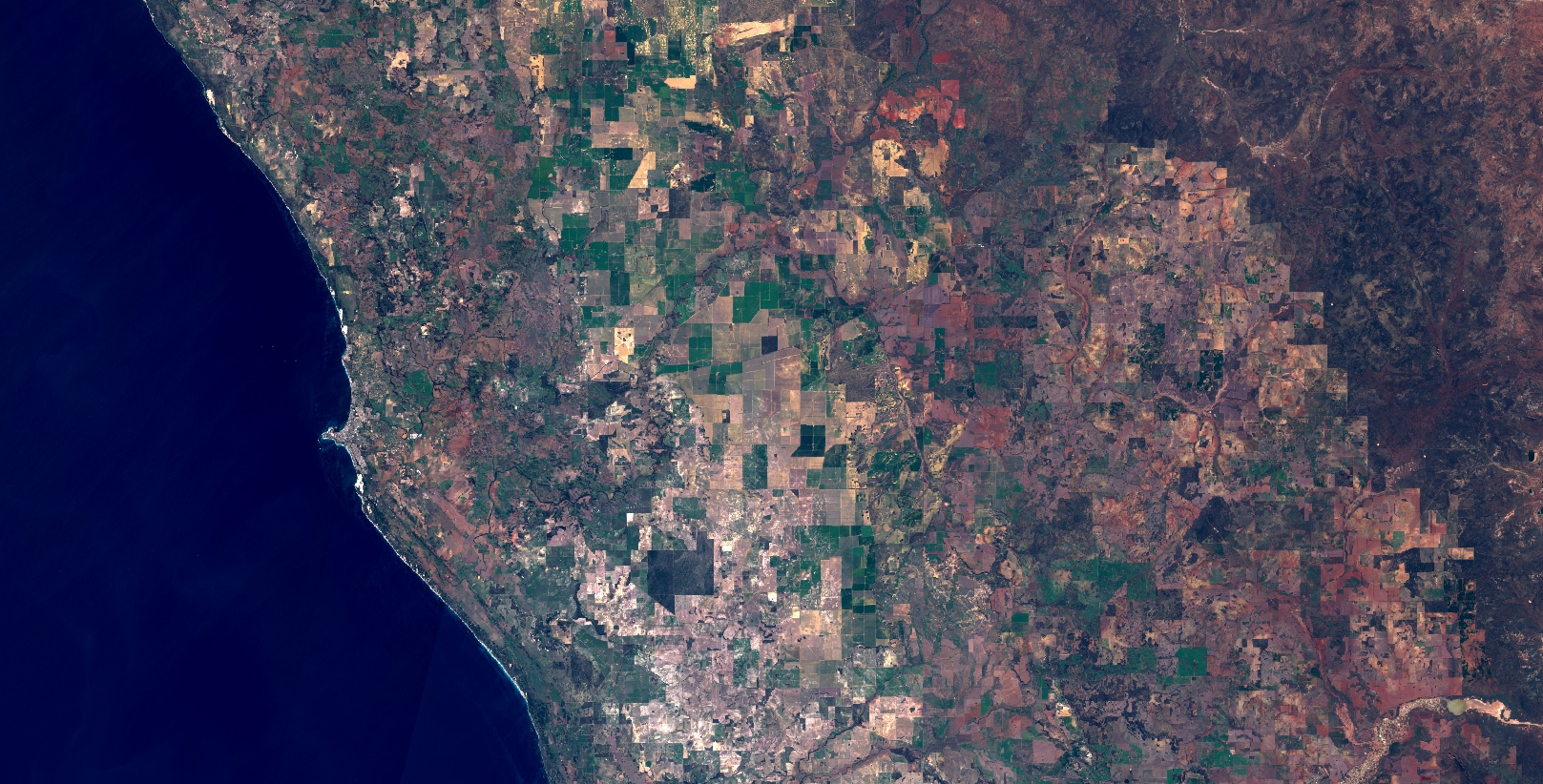
Western Australia is on track for a record canola planting, as new DAS Grain Intelligence data shows Australia’s early winter crop start is now resulting in the season's earliest ever crop type signals.
The latest DAS Crop Estimates report shows 2.3 million hectares of canola detected in Western Australia, already above the previous record of 2.2 million hectares set in 2022.
The estimates are the earliest DAS has produced for a winter cropping season, made possible by the early break across southern Australia, which brought crops through establishment earlier than usual.
Across Australia’s 33.8 million hectares of potential winter cropping land, 20.4 million hectares, or 60%, had reached establishment by 26 June. That remains well ahead of both the 2020-25 average for this point in the season, at 17.4 million hectares, and the 13.9 million hectares established at the same time last year.
“We don’t normally publish individual crop area estimates this early. The crop usually has not developed enough to be reliably differentiated in satellite imagery, but the early break has brought enough crop through establishment that both canola and lentils are already visible at scale,” said Sam Atkinson, Earth Observations Lead at DAS.
“The WA canola number is the one that stands out. It has already passed the previous record, and there is still growth expected in the central and eastern Kwinana South zone that should come through over the next few weeks.”
Western Australia is now 62% established, up sharply from 39% a fortnight earlier, bringing the state back into line with its historical pace and just ahead of the same time last year.
South Australia is now 82% established, compared with 10% at the same time last year and a 2020-25 average of 40% for this point in the season. DAS says South Australia has no recent historical analogue, with the nearest season still 29 percentage points away on a trajectory basis.
Victoria is 71% established, well ahead of its 2020-25 average of 36% and far above the 23% established at the same time in 2025.
“The early break gave SA and VIC growers a better opportunity to get crops established at their chosen timing. That is important due to the predicted dry finish later in the season thanks to the forecasted El Nino,” Atkinson said.
The latest data also shows the national season remains uneven.
New South Wales is 48% established, slightly behind its 2020-25 average of 52%, but ahead of the 43% established at the same time last year. Southern NSW is tracking well, while north-west NSW remains 15 to 30 percentage points behind average in several major cropping districts.
Queensland remains the furthest behind its own history, with 24% of paddocks established compared with a 2020-25 average of 49% and 61% at the same time last year. However, Central Queensland is running ahead of average, contrasting with the later start in southern Queensland.
“The national number hides the variation we see in the state-by-state breakdown,” Mr Atkinson said.
“Southern Australia is well placed, WA canola is the strongest crop-type signal so far, and the north is still mixed. North-west New South Wales and southern Queensland remain the areas to watch.”
DAS said crop estimates will continue to be refined as more paddocks establish and crops develop further.
Key figures
- National establishment: 20.4 million hectares, or 60%, as at 26 June 2026
- National establishment same time last year: 13.9 million hectares
- National 2020-25 average for this date: 17.4 million hectares
- Western Australia establishment: 62%, compared with 59% this time last year
- Western Australia canola detected: 2.3 million hectares, above the previous record of 2.2 million hectares
- South Australia establishment: 82%, compared with 10% this time last year
- Victoria establishment: 71%, compared with 23% this time last year
- New South Wales establishment: 48%, compared with 43% this time last year
- Queensland establishment: 24%, compared with 61% this time last year
About DAS Grain Intelligence
DAS Grain Intelligence is Australia’s market-leading source of grain production and qualitative market intelligence, providing organisations across the grain supply chain with timely insights into seasonal conditions, crop production and grain supply across Australia’s major cropping regions.
Powered by satellite imagery, machine learning and geospatial analytics, DAS Grain Intelligence delivers highly accurate crop area, crop type, yield, production and harvest insights, supported by up to 20 years of historical crop productivity data. The platform helps grain traders, agribusinesses, financial institutions, insurers and government agencies monitor seasonal developments, assess risk and make more informed commercial decisions.
DAS Grain Intelligence includes Australia’s only crop type mapping product, providing unique visibility into both historical and in-season crop activity across the Australian grain market.
Do you have a grain market question for our team? Reach out via the form below.